Nuclear energy plays a major role in the U.S. electricity system, providing reliable, emission-free power to homes and businesses. As the world works toward lower carbon emissions, nuclear power continues to gain attention as a stable and scalable clean energy solution.
Jump to a specific section
Nuclear energy produces electricity through nuclear fission, delivering reliable, carbon-free power to the grid. It currently supplies nearly 20% of U.S. electricity and accounts for a large portion of the nation’s emission-free generation. With new reactor technologies and growing climate goals, nuclear power is becoming an increasingly important part of the transition to cleaner energy systems.
Nuclear power generates reliable emission-free electricity.
It produces nearly 20% of U.S. power.
Reactors create energy through nuclear fission.
New technologies are improving safety and efficiency.
Nuclear supports long-term climate goals.
The first commercial nuclear power plants began generating electricity in 1957, marking the beginning of a transformative era in the nation’s energy landscape. By the late 1980s, the U.S. boasted more than 112 operational nuclear reactors, signaling a peak in nuclear production. However, the Chernobyl nuclear accident in 1986 cast a shadow over the industry. The incident triggered widespread public safety concerns, resulting in the decline in nuclear production from 1990 to 2020. During this period, 18 reactors were decommissioned.
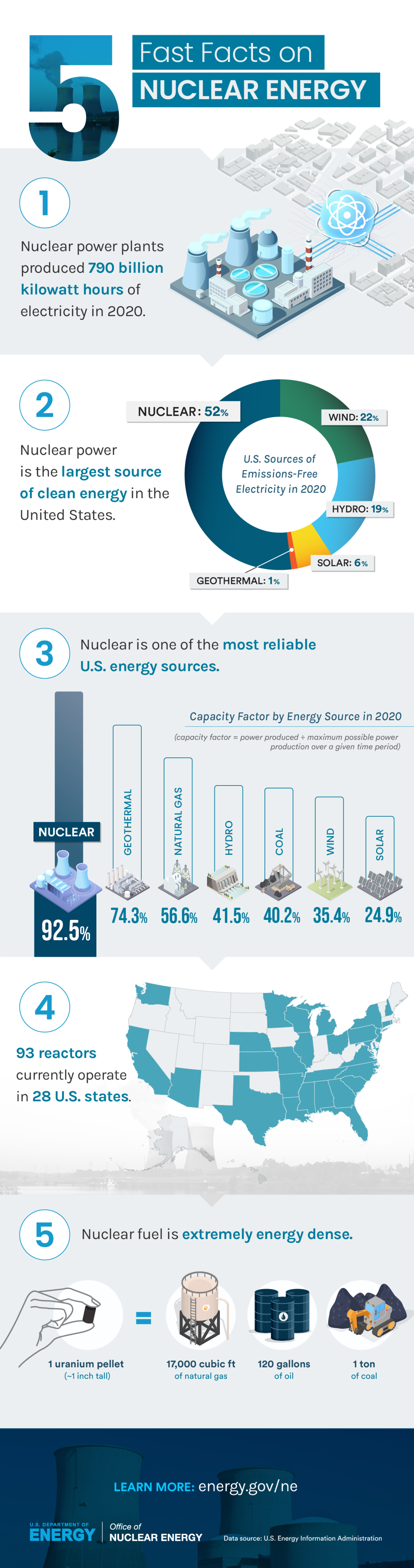
Despite these challenges, the tide is turning for nuclear energy in the U.S. Currently, 93 nuclear reactors are operational across the country, providing reliable electricity to millions of homes and businesses. This resurgence of interest in nuclear power is fueled by new sustainability initiatives aimed at achieving a zero-emissions future. In line with global commitments, the United States has joined more than 20 countries in pledging to triple nuclear energy capacity by 2050. To achieve this ambitious goal, the U.S. is supporting nuclear deployment domestically as well as in developing nations.
The country’s first commercial nuclear power plant, the Shippingport Atomic Power Station in Pennsylvania, begins generating electricity for the Pittsburgh area.
The Three Mile Island Nuclear Generating Station near Harrisburg, PA suffers a partial nuclear meltdown. Though there were no injuries or documented radiation overexposure, the event marked the worst accident in U.S. commercial reactor history and contributed to public distrust in nuclear power generation.
The explosion of Reactor 4 at Chernobyl in the former Soviet Union makes international news and further stokes public fear of nuclear power.
The number of operating power reactors in the United States peaks at 112. They account for around 22% of commercial electricity generation in the U.S.
Unit 3 at the Alvin W. Vogtle Electric Generating Plant in Georgia becomes the newest reactor to enter commercial service in the U.S., bringing the U.S. to 93 reactors operating across 54 nuclear plants.
Nuclear reactors generate electricity by harnessing the energy released from splitting atoms in a process called nuclear fission. Inside the reactor core, uranium atoms are bombarded with neutrons, causing them to split and release a large amount of heat. This heat is used to boil water, producing steam that drives turbines connected to generators. As the turbines spin, they generate electricity, which is then sent to power grids for distribution to homes, businesses, and industries.
Small Modular Reactor: Small modular reactors (SMRs) are a new innovation in nuclear technology in which each piece of the reactor is made in a factory and transported to sites where each piece is ready to “plug and play” upon arrival. SMRs are essential in supporting the adoption of nuclear power in developing countries.
Light Water Reactor: The existing U.S. nuclear fleet is primarily made up of light water reactor technology. This methodology uses water as both the coolant and the neutron moderator to facilitate nuclear fission. The two most common types are boiling-water reactors (BWRs) and pressurized-water reactors (PWRs).
Advanced Reactor Technologies: Advanced nuclear reactors take light water technology to the next level with significant improvements to enhance safety, efficiency, and longevity of nuclear power plants. The Office of Advanced Reactor Technologies (ART) sponsors the research, development, and deployment of emerging reactor technologies, such as nuclear fusion reactors.
Versatile Test Reactor: In February 2019, the Department of Energy (DOE) announced plans to build a versatile test reactor (VTR) specifically designed as a testing site for new technologies. The purpose of this testing site is to modernize nuclear research and infrastructure to encourage wide-scale adoption.
Nuclear power is not considered renewable because it relies on utilizing finite resources like uranium, however, it is regarded as a clean energy source. It produces minimal greenhouse gas emissions during electricity generation, contributing to efforts to combat climate change. Below, we explore more reasons why nuclear power is a clean, sustainable energy source.
Nuclear power produces zero greenhouse gas emissions. The nuclear fission process produces steam rather than harmful gas emissions, like fossil fuels. According to the Nuclear Energy Institute (NEI), 470 million metric tons of carbon emissions were avoided in 2020 through nuclear power generation. Furthermore, nuclear energy preserves air quality by removing harmful air pollutants that contribute to acid rain, smog, lung cancer, and cardiovascular disease.
Nuclear power plants are able to produce massive amounts of carbon-free power on less land than any other clean energy source. Standard 1,000 megawatt (MW) nuclear facilities need a mere 1 square mile to operate. A wind farm would need 360 times more land to produce the same amount of energy.
Nuclear fuel is extremely energy dense. A single uranium pellet is about an inch tall, producing the same energy as 17,000 cubic feet of natural gas, 120 gallons of oil, or 1 ton of coal. All of the nuclear fuel used by the nuclear energy industry over the last 60 years can fit on a football field at a depth of less than 10 yards. This waste can also be recycled and reprocessed for future use.
Nuclear power is one of the most reliable sources of power. One way the energy sector measures reliability is through capacity factor, or the amount of up-time when a plant is producing power, up to 100%. In 2020, the capacity for nuclear energy was an impressive 92.5%. The second-closest energy source was geothermal power with a 74.3% capacity factor.
While nuclear energy does not contribute to global warming, there are still several environmental considerations for this energy source. Most notable are addressing concerns related to accidents and radiation exposure. Stringent safety protocols, innovative reactor design, and emergency preparation measures mitigate the risk of accidents and limit radiation exposure. Moreover, nuclear waste management is crucial, requiring specialized facilities to ensure safe storage and disposal of radioactive waste.
Ongoing research and development efforts are focused on enhancing waste management techniques, including recycling or repurposing waste and byproducts. Current research efforts will ensure minimal environmental impact and safeguard public health for future generations.
Historically, public opinion about nuclear power has been divided, primarily due to public safety concerns. Fortunately, public opinion is changing, becoming more open-minded to greater deployment of nuclear power plants. This is due to the rising and volatile costs of fossil fuel power and growing concerns about climate change. In a recent survey, 57% of Americans stated they favor more nuclear power plants. While nuclear power approval is not quite as high as renewables like solar (82%) or wind power (75%), it is a significant step towards widespread public acceptance that aligns with global sustainability goals.
Ultimately, nuclear power is an essential factor in the transition towards a more sustainable energy industry and a net-zero carbon emission future. Ongoing research and advancements in reactor technology and waste management bolster these efforts. Greater deployment of nuclear facilities reduces our reliance on fossil fuels and contributes to a healthier planet for generations to come.
If you would like to take the first step towards sustainability, consider switching to a zero-carbon energy plan. As your trusted resource in the energy industry, Integrity Energy is dedicated to providing customized energy solutions that match your business and sustainability goals. Embark on a journey towards sustainability by requesting a free quote today.

Is nuclear energy safe for businesses?
Yes, nuclear energy is considered safe for businesses when stringent safety protocols and regulations are followed. This ensures reliable and secure power generation with minimal risk to operations.
How does nuclear power compare to other energy sources in terms of cost?
Nuclear power offers competitive pricing and long-term stability compared to other energy sources. It is often less expensive than fossil fuels, which are prone to volatile pricing. Nuclear energy provides small to midsize businesses with cost-effective and reliable power that helps reduce operational expenses.
What are the benefits to switching to a nuclear energy provider?
Switching to a nuclear energy provider offers businesses reliable power, cost savings over time, and a reduced carbon footprint. Nuclear energy plans contribute to sustainable operations and long-term financial stability.
What industries benefit most from nuclear power?
Industries such as manufacturing, technology, agriculture, space exploration, remote communities, and army bases benefit most from nuclear power due to its reliable energy supply, cost-effectiveness, and potential for reducing carbon emissions while meeting diverse energy needs.
What steps can I take to switch my business to a nuclear energy plan?
Businesses interested in making the switch to a carbon-free nuclear energy plan should request a free quote from our energy experts. Integrity Energy is one of the country’s largest commercial energy brokers. We’re able to leverage our partnership with more than 30 trusted energy providers to create the most competitive commercial nuclear energy plans on the market.
For additional answers to your energy industry questions, please visit our general FAQ page.
Integrity Energy helps businesses explore low-carbon electricity options and competitive energy plans. Connect with our experts to build an energy strategy that supports both sustainability goals and long-term cost stability.

Kat Garside